Showing posts with label Lady Bertilak. Show all posts

Sunday, April 17, 2016

True Love and a Villain worth hating (or is it...)

Finally! The story we have all been waiting for! At least, this seems to be the story for which I have been waiting. Despite all the magic, love and friendship that abounds in every King Arthur tale, it always felt as thought something was missing. I think what has been bothering me about previous works is two-fold.
Firstly, the fact that much of the love we see in the legends is wrong somehow. Sometimes it is a king impersonating and then killing his vassal to get  the vassal's wife. Or the time King Arthur was attracted to (some say in love with) his sister, which led to disastrous incest. Even Guinevere and Lancelot, who love Arthur, are not honorable at all when they break all kinds of vows and rules to have their love affair. Some of that "wrong" love is preserved in Avalon High, in Lance and Jenny's relationship, and the whole shadowy matter of  Will's (a.k.a Arthur's) father having killed his friend to marry his wife. But, this time, it seems like the main love story does not have that element of "wrongness." If Ellie and Will's relationship progresses the way it has been, and the two end up together, it will be for all the right reasons. Ellie falls for Will because he sticks up for the underdog, because he is kind, and funny. Plus, after she falls for him, she does nothing to steal him away from his girlfriend. She does not pine ridiculously, she does not starve herself to death, she makes the decision to be the girl that makes him laugh-despite the facts that it hurts to see him with his girlfriend and that her friend told her about "guys not falling in love with girls that make them laugh" (Cabot 88).
The other thing that always seemed a little strange to me about the King Arthur stories of the past was the simplicity of the villains. For the majority of the stories, villains were bad because they were inherently evil. Giants and dwarfs were always villainous, because of course if one fails to be of average size, they are evil. And evil knights like Meleagant have no reason for being bad. I like that this story moves away from making the villains so simple. It appears that Marco, (an incarnation of  Mordred, perhaps) is to be the villain of this story. If Marco is the villain, I will have no trouble accepting his role. Marco has every reason to be a villain. He grew up with nothing, he just lost his father and had to uproot his life soon after to live with a perfect stepbrother and strict Stepfather. Then he finds out that his perfect stepbrother is really his half-brother (a fact hidden from him by his only remaining parent) and that his Stepfather may have had his Father killed in order to marry his mother.
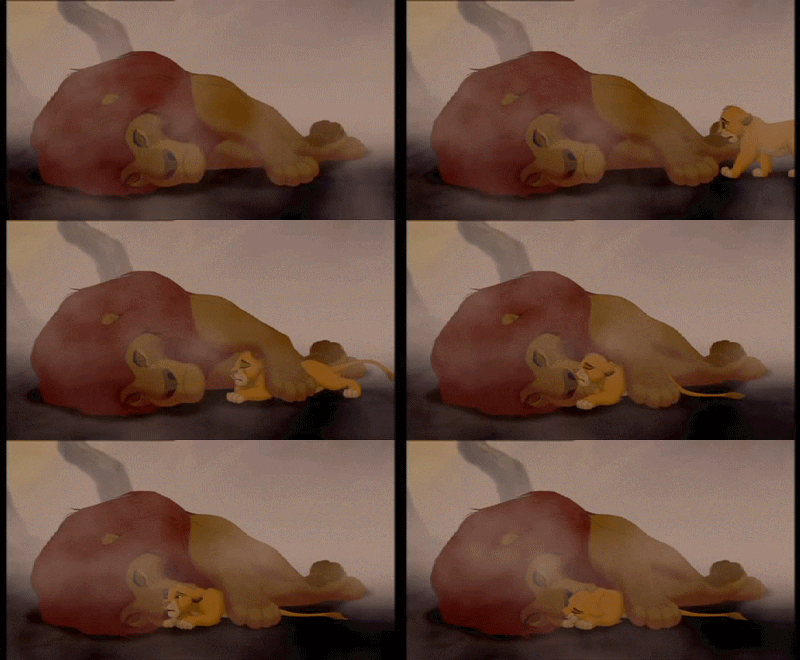
childhood
Poor Marco, he has no Timon and Pumbaa to keep him from the Dark Side.
 If half of all that happened to me, I would most definitely be a villain. Not to mention the fact that a villain whose actions may be justified makes things a little more complex for the reader. Do we hate the villain as the enemy of the hero? Or do we sympathize?

See you in our next incarnation,

Lady Bertilak

All quotations taken from Avalon High by Meg Cabot

Pictures:
http://roflhumor.com/wp-content/uploads/2012/09/crocs.jpg

https://media.giphy.com/media/W6wzxdx43ikEw/giphy.gif


Sunday, April 3, 2016

Much comes to Light and it's...Anticlimactic

Lords and Ladies, Knights and Maidens, I have to say… I am a little disappointed. How can the King Arthur we have just heard about be the King we have come to know so well? Yes, he seems a little idiotic, and makes his share of mistakes, but we do not expect him to fall this way. Remember Uther Pendragon? Now that was a King that deserved retribution for his actions. Yet Uther was never punished. Kings are not punished for their actions. That is the rule in the world in which we live. Regardless of the fact that Arthur slept with his sister and fathered a child, and the fact that he killed almost an entire generation of children, Arthur’s original sin was ignorance. How can our King be punished for that, when Kings who committed far worse escape unscathed?
Even if one accepts, with great difficulty, the downfall of King Arthur, the mode of his end is so pitiful. With all the adventures we have seen for the Knights of the Round Table, the thing that harms him and Camelot should be something worthy of fables and bards. We expect a magical beast, a horde of knights, a magic spell. Instead of all that, the catalyst for the banishing of Sir Lancelot and the near burning at the stake of Queen Guinevere is a spiteful young man. Mordred. Despite the fact that Mordred shares King Arthur’s blood, he has had no special training, or done anything of note other than stab a man in the back, and cry like a child when he is accused of running away from a fight.
tantrum temper tantrum throwing a fit
Yet this is the creature that manipulates King Arthur to harming himself and Camelot by bringing to light Guinevere's affair and eventually robbing Arthur and Camelot of Lancelot. The problem seems to be Arthur’s inability to abandon his rules and his responsibility to uphold the rules fairly. Mordred does not operate on such a code of honor.
We remember from Gawain’s run in with me and the green girdle that self preservation is the one valid reason for abandoning the rules of honor. Yet, King Arthur does not do this. Perhaps it is not Mordred’s manipulations that shaped the ending of this story, but Arthur’s own inability to bend and use practicality. In a way, that may be even sadder than being brought down by your own son.
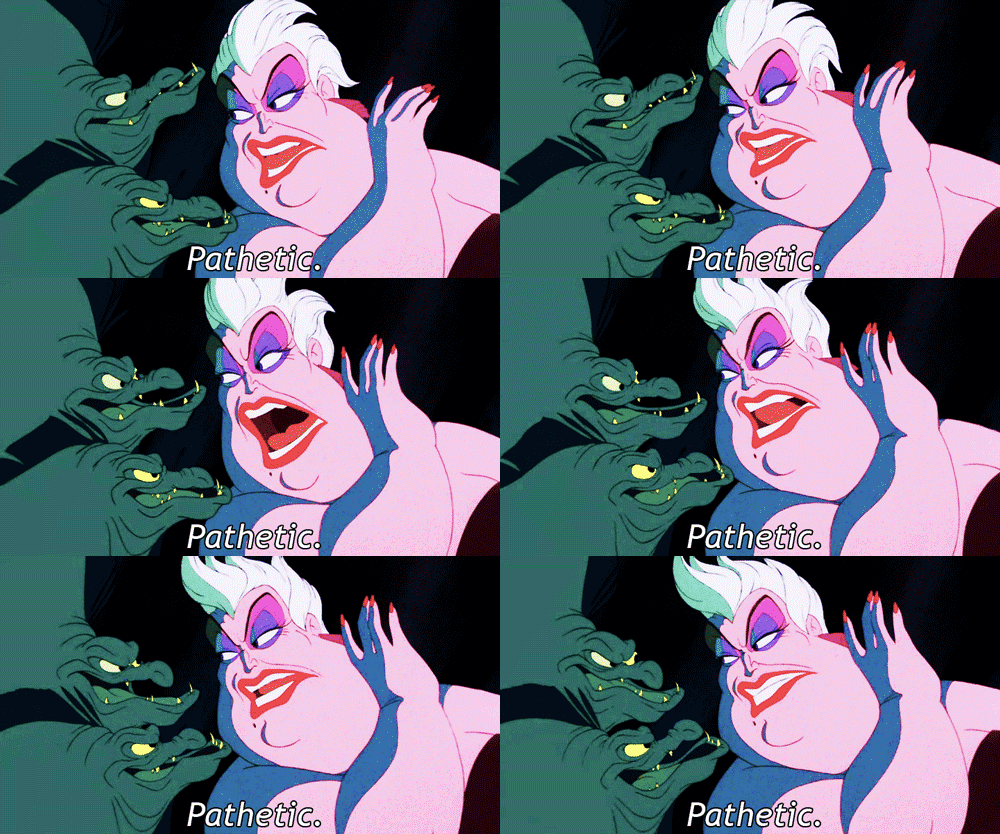
disney ursula pathetic
Another disappointing turn of events was that of Queen Guinevere and Sir Lancelot. They seem to have become very meek in their old age. The pair seems to accept all the misfortunes that befall them, and even with a WARNING, do nothing to protect themselves. Is it that the reign of King Arthur has made Camelot so peaceful that the people of court have lost the ability to engage in twisty court politics?  Or is it that the passions of these star-crossed lovers has cooled in their old age? Do Lancelot and Guinevere seem so accepting of their misfortunes because they have gained some wisdom or retained their thoughtlessness and lack of foresight?  They are both still alive however, so their story must not be finished. Maybe we shall get more answers.

Sunday, March 6, 2016

A change in the storyteller

Oh what a difference a storyteller can make! Much of the the first part we read this week, "Merlin," is a retelling of the story of Arthur's beginnings. Thus far, we have been told this story twice already, but the flavor of the story has changed in this rendition. Yes, the knights still go on grand quests to prove how honorable they are (and sometimes tests prove how DISHONORABLE they are) and ladies are charming and pure. However, much of the scandal that made the older stories come alive reduced here.

Remember, dear Lords and Ladies of the Round Table, how King Uther tricked Igraine and warred with her husband because Uther found the lady pretty? This time, when that story is told to us, we are given an intriguing bit of extra information. Apparently, Uther and Igraine's husband, the Duke of Tintagil had been enemies. It feels like this tidbit was added to excuse King Uther's obsession with Igraine, which causes war and death. The argument seems to be that, in addition to bringing about the conception of King Arthur, the Duke of Tintagil may have deserved what he got... Plus, he did leave court without permission...
Cheezburger fail art & design ouch punches

Could this be a knew moral turn for our brave heros and lovely ladies? If it is, the fans of debauchery have no cause to fear yet. Camelot, the greatest kingdom on Earth, still brims with scandal. Ladies still cheat on their spouses and are found out (recall the lady whose husband left her in a forest), and the knights are little better. Even the mighty King Arthur has two illegitimate children thus far in the tale, one of whom was conceived by his AUNT.
story cool story bro quite a story ooh boy tall tale
Plus, we are finally told the whole story of the sword in the stone, so perhaps that was worth the ladies suffering through the battles and the jousts. The story of the sword and the stone story brings back the feelings of honor and destiny we are all drawn to. This is one of those moments that brings a sense of wonderment to the story of King Arthur. I think this is why we love King Arthur and his knights so much. Despite the fact that they have human weaknesses, like cheating on their spouses or taking magical green girdles for protection against magical green knights, the universe often seems to conspire to bring about their happy endings. And who does not like a happy ending? It was indeed clever of Sir Thomas Malory to place his characters in a universe that seems to believe they are the "good," regardless of what they do. Ladies, knights, and even peasants, can see ourselves in the characters.
Caroline Emily Huber sword in the stone

Until the Table meets again,

Lady Bertilak

Sunday, February 14, 2016

He was a man after all

Greetings Lord and Ladies of the Round Table! What a fantastic tale of honor and magic we have been graced with! It reminds me of the magic that inundates my own home in the Wilderness of Wirral. However, the most amazing things about Merlin’s story were the parts that were not purely feats of magical prowess.
When we think of the amazing wizard of King Arthur’s court we think of the man that knew all that was and will be, and used his power to expose a dishonorable knight in Arthur’s court. Or, we think of the sorcerer who changed the face of King Uther and allowed for Arthur to be conceived. But the most important part of his story is its revelation of the man behind the mask by illuminating his thoughts and feelings through his backstory. One of his first acts as a child is to save the life of his beloved mother, who surely would have died without him. One of his last acts is to fall in love, or perhaps lust, with Viviane the Huntress and serve her every whim. Unlike the episode with his mother, however, Merlin’s emotion for a woman does not end well. We are never sure who is in the wrong in this scenario. Perhaps Merlin in is a lecherous old man intent on dishonoring a virtuous young lady, or perhaps Lady Viviane is a cold-hearted creature who take advantage of Merlin’s love and magical expertise. That question, however, is of little importance. In the end, the fact remains that the great Merlin is destroyed by a woman he never suspected was a danger. In fact he is  still “waiting and hoping to have his way with her” according to the The Prose Merlin, when she is planning his death.
love space unrequited love the cosmos

In this way Merlin’s life comes full circle. His first act is motivated by love and saves him; his last act is motivated by love and ends him. While the tales of powerful knights and beautiful ladies may be lost to time because the heroes of these tales were one dimensional, Merlin shall always be remembered. Merlin shall be remembered because he had both strengths and weaknesses. As an infant Merlin was given both infernal and heavenly powers for he was meant to choose between them. In the end, he did as most of us do, and fell somewhere in between.
The blow dealt to the realm  by the loss of such a powerful magician is great indeed, but Camelot was alright in the end. Viviane returns to Camelot and uses her magic to protect KIng Arthur from the sword-thief Morgana and Arthur's challenger.
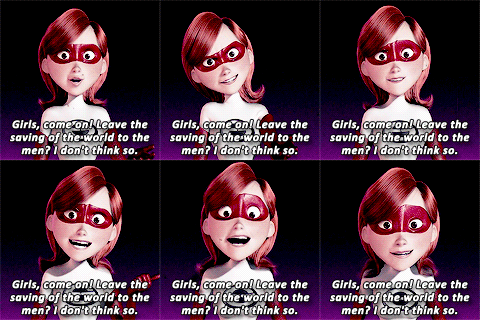
feminist feminism the incredibles superhero girl power

Until Next Time,
Lady Bertilak

Sunday, January 31, 2016

The Lady Bertilak de Hautdesert

I am Lady Bertilak de Hautdesert, the honorable wife of Lord Bertilak de Hautdesert who is also known as the Green Knight. I live in a grand manor in a land of magic filled with fearsome creatures and mysterious beings like trolls, giants and fae. Such is the Wilderness of Wirral, the land of my home.

My grand hall is decked in tapestries from faraway lands and all the bedchambers are decorated with the finest silks and hangings. Despite the many treasures possessed by my husband, I am perhaps valued the most. For it is said that my youth and figure make me “fairest of all” (“Sir Gawain and the Green Knight” 435). Knights like the hailed Sir Gawain have compared me even to the Queen Guinevere, a great lady said to be the most fair in the land.

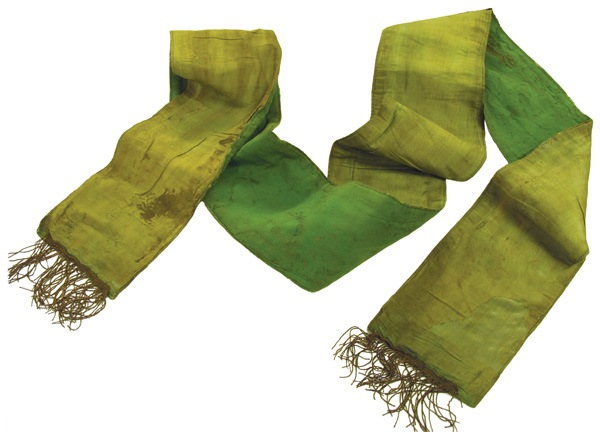
But make no mistake, my value is in far more than my form. While I cannot perform magic like the enchantress Morgan le Fay, my companion in court, I am skilled in judging the honor of a knight. I, however, employ methods different from those of my husband. My husband tests the honor of knights on the battlefield with sword and shield, but knights, honorable or otherwise, can expect such attacks. My tests are far more subtle, and test the honor of a man off the battlefield by testing their courtly behavior. This is the way I tested the knight Sir Gawain when my husband commanded the knight be tested. Though he did not keep the favors of kisses I bestowed upon him, he accepted the green girdle I gifted to him. As an expert of courtly love, I, more than my husband could see that he retained his honor by only accepting the gift to save himself while also avoiding insulting a gentle lady by spurning her offering.

My report of Sir Gawain’s honor surely aided in the prevention of serious bloodshed when Sir Gawain and my Lord Bertilak met to test their strengths. In fact, convinced of the honor of Sir Gawain, my husband and the knight parted not as enemies, but as allies. In this way courtly love and behavior tested honor without the violence of a magical test. Can anything compare to the power of courtly conduct of lords and ladies? Sir  Gawain quickly forgot the blow my husband dealt him, but he always wore my green sash as a lifelong reminder of his weakness.
References:

"Sir Gawain and the Green Knight"